
The Hero's Journey: My Sophmore Year Wrapped
It’s fair to say I am not much of a fiction reader—or writer, for that matter (though as you will hear about later, I did somehow write a children’s book this semester). However, one of the biggest lessons I learned this year about research, higher education, and maybe life more broadly, came from what our research seminar professor taught us on the very last day of class: the concept of “The Hero’s Journey.”
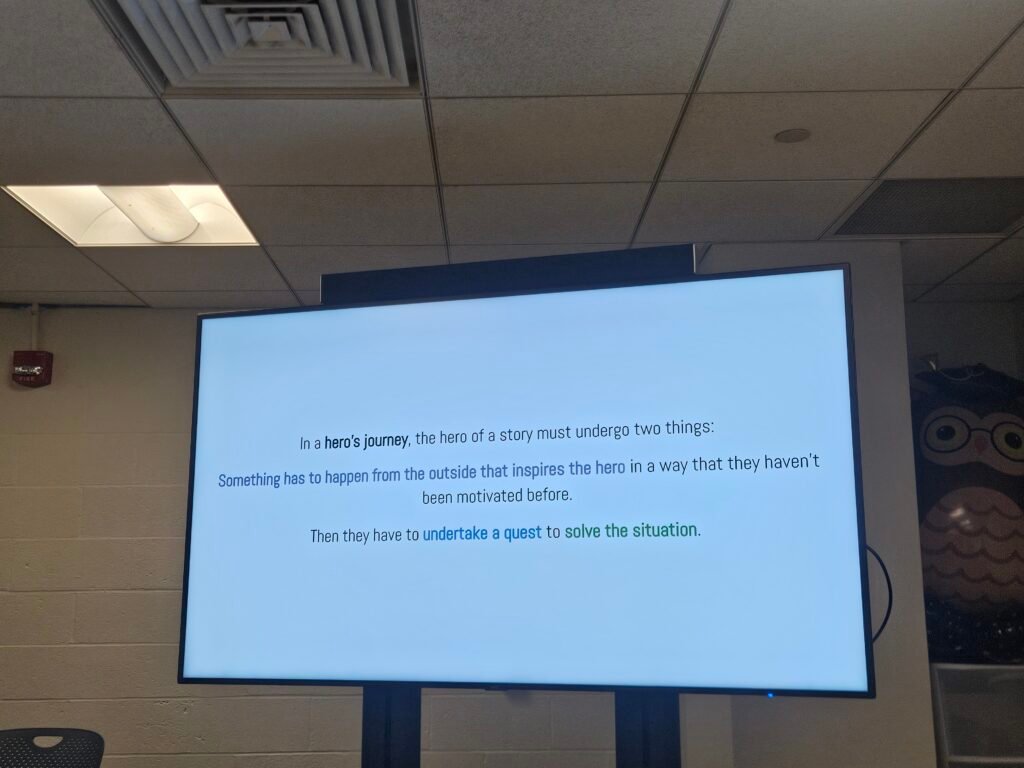
In a hero’s journey, the hero of a story must undergo two things: Something has to happen outside that inspires the hero in a way that they have not been motivated before. They have to undertake a quest to solve the situation.
And while introducing this framework was admittedly a clever ploy to get us to write compelling abstracts—and a sentimental way to show us on the last day of class that our research is really a reflection of ourselves—I honestly couldn’t summarize my sophomore year any better. Part of our final seminar was reflecting on everything we experienced this year, framing this journey as a letter to our future selves. So, why reinvent the wheel? Without further ado, here is my journey from this semester, and this year more broadly, shared through that lens (with a few modest edits).
Dear Delia,
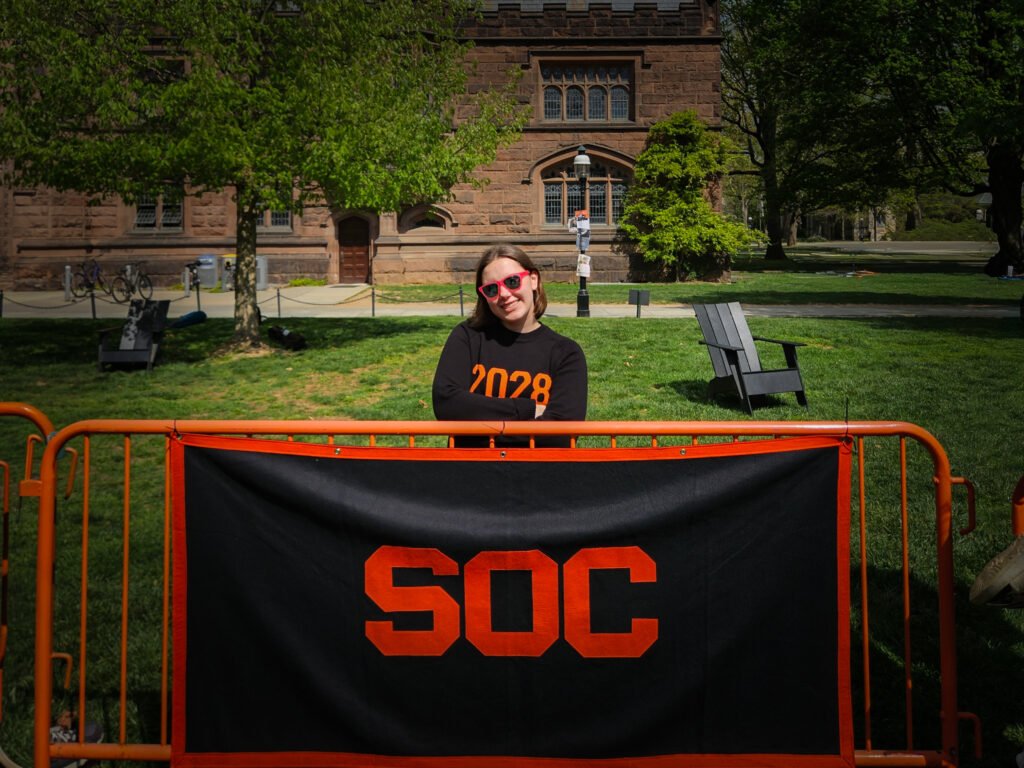
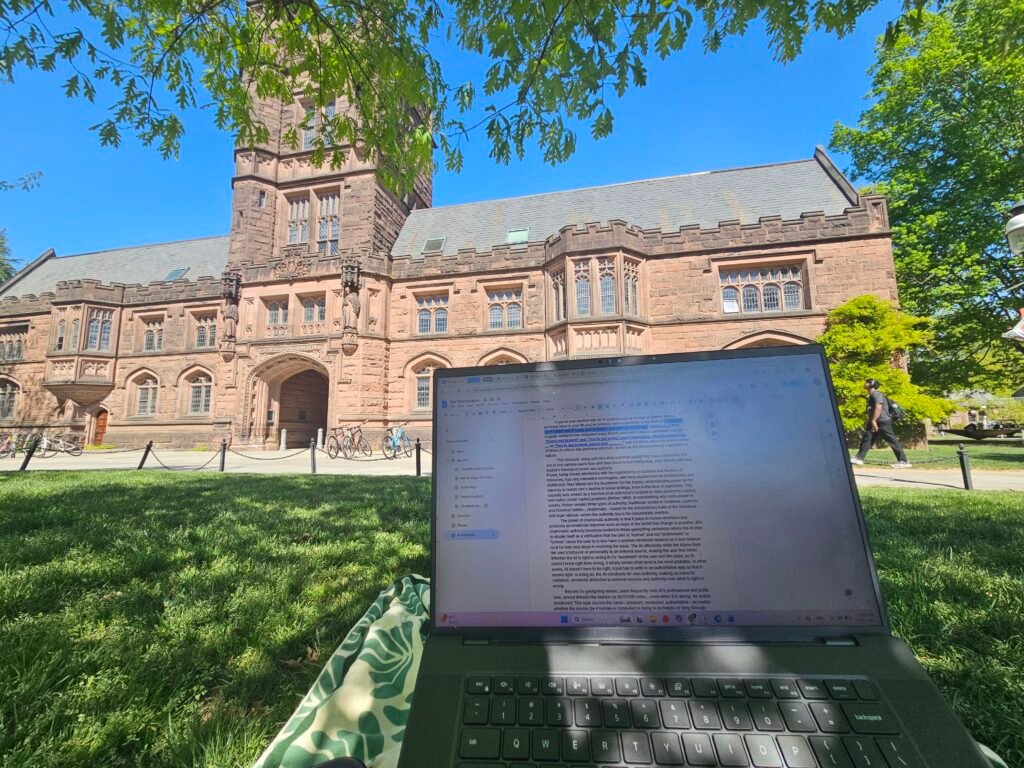
I hope this letter finds you well—and congratulations on surviving sophomore year! Time flies when you’re having fun… or when you’re bored. I’m writing to you on this Sunday morning (before Lawnparties) from the comfort of my room, with a freshly brewed caramel latte powering me through this second-to-last big essay of Reading Period.
Before starting this, I looked back at our reflection from the fall to remember exactly what I wrote and how I wrote it. In that first paragraph, I talked a lot about how well I managed my time during the winter, “having solid drafts completed before reading week even started (minus this reflection), and scheduling myself around eight-hour work days with some downtime for watching movies.” I have to say, I think you did even better this term.
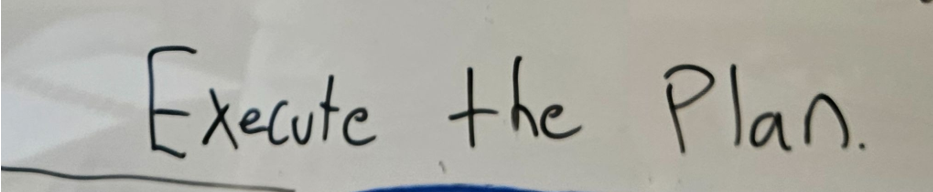
While having drafts ready in the winter meant writing them all during Thanksgiving break, these last four weeks of the spring term have been spent grinding through much larger papers and projects. I feel like you’ve never been naturally good at working on projects over a long period; you usually want to crush everything out in one sitting. However, with the help of WRI 236, you’ve learned to make a plan and stick to it. In fact, sitting here in our sophomore room, I’m looking up at our beautifully organized whiteboard with the quote, “Execute the plan”—something you dreamed up on a Peloton bike a few weeks ago. While you may have been extremely anxious in the past, wanting to sit down and do everything at once, you’ve become very good at dividing the work and dedicating effort to one task at a time (something we’ll get into later when we discuss the weeklies).
Before delving too deep into WRI 236 (ugh, thinking and work), let’s quickly reflect on this spring term. You accomplished a lot! The start of this term was a little rough with the rejection of your dream internship in Barcelona, but three days later, you got off the waitlist, and now you’re headed back for “Delia’s Summer in Spain Parte dos” in 19 days!

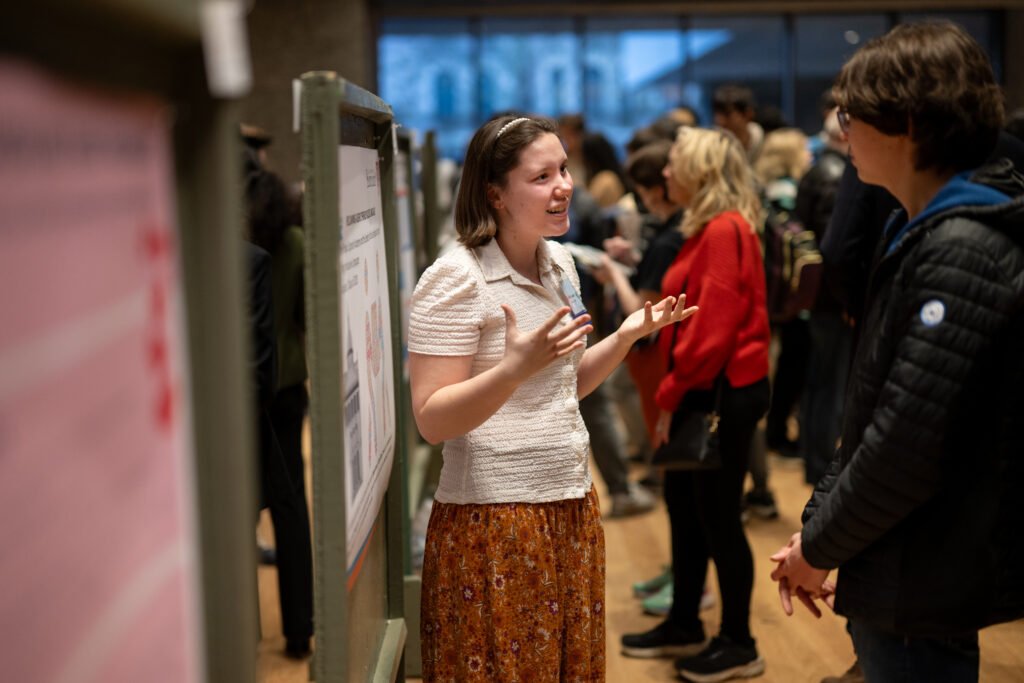
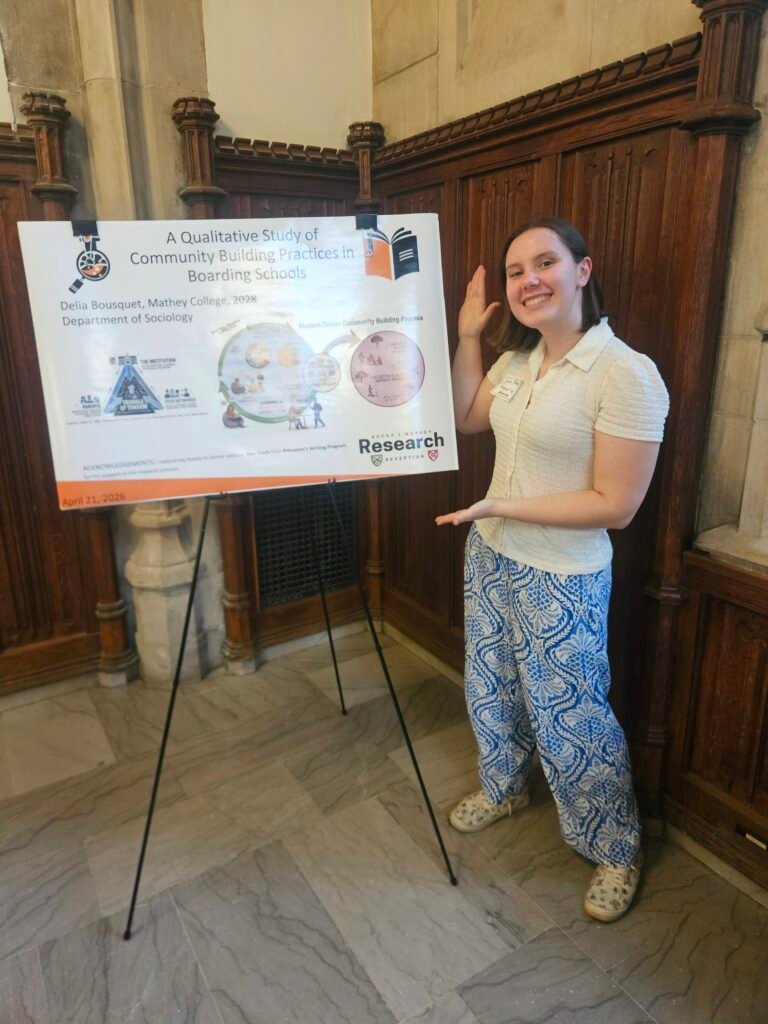
From that little win, everything just kept going right. Out of the blue, you got offered another job that you applied for back in August to take pictures for the African American Studies Department. You took a leap and threw together a Princeton Research Day poster at the last minute and absolutely killed it at your first “big” academic conference-like event. You wrote a beautiful article for the Spanish and Portuguese Department about the minors, making you officially “that girl from the spanish department” that people would come up to in the dining hall and ask random questions. Oh, and you got into Oxford for study abroad. Then, you absolutely killed it during midterms week, getting a 97% on both your two exams, submitting a great WRI Profit, pushing through a lengthy transcription and essay process for the terrible oral history class, and getting 100 percent on your Spanish essay.
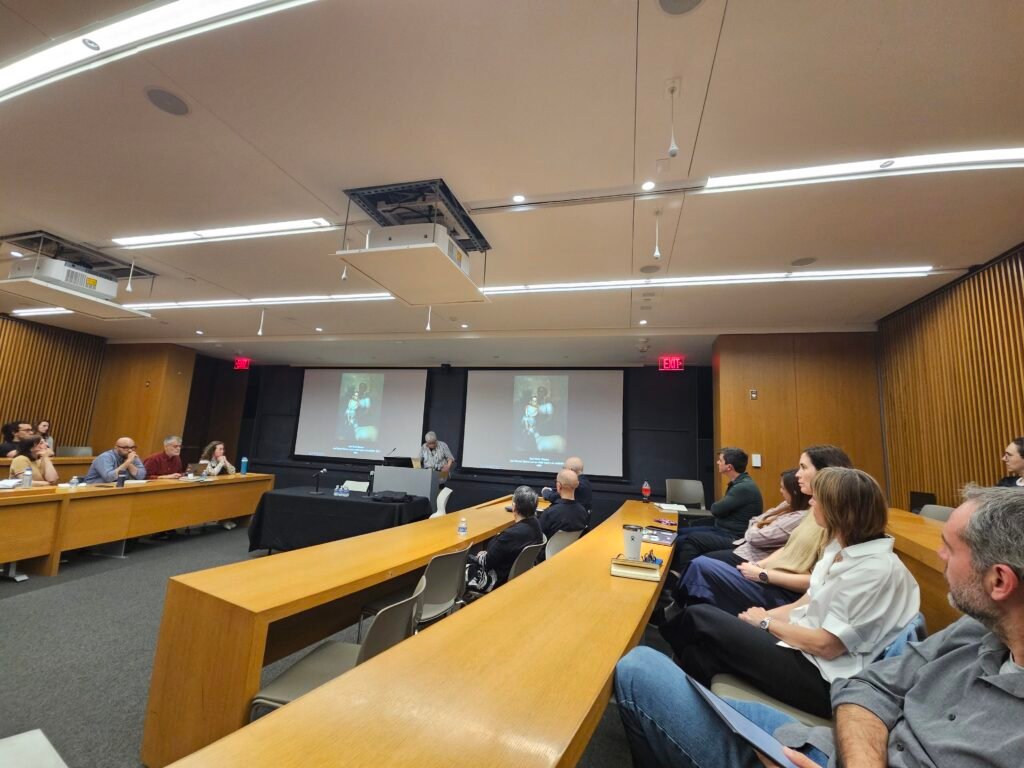
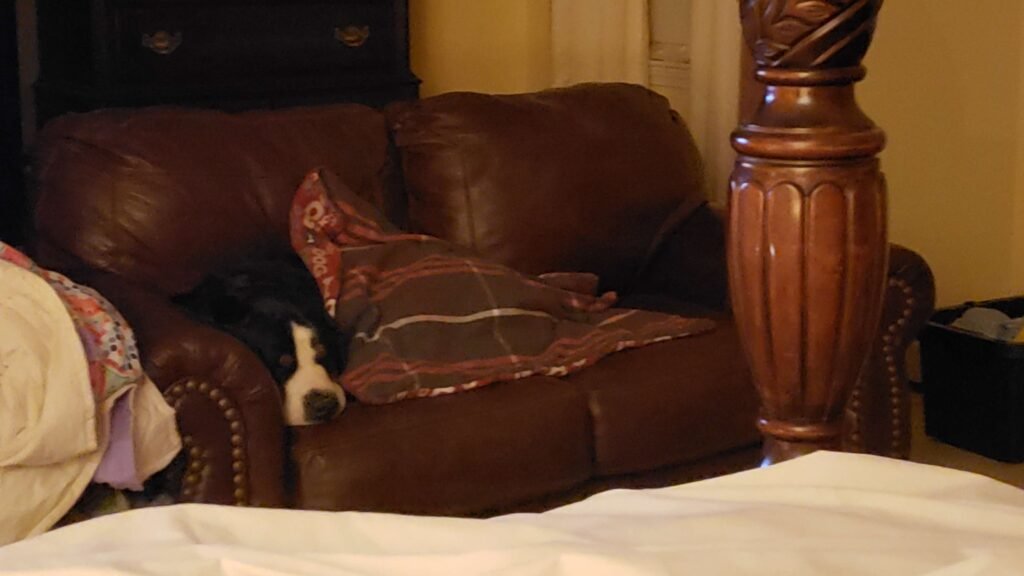
You had a relaxing Spring break and came back to sunshine and warmth to power through the last six weeks of the semester. Your first week back, you wrote seven pages for your WRI project (is that having energy or what?). Then you hit your biggest challenge of the semester, a call from your parents on the Sunday before week eight that Valentine (your dog of nine years) would not stop having seizures and he had to be put down. You hopped on that last Amtrak train out of Princeton Junction, making it back to CT at 10:30 pm to then arrive home to what basically was a dead dog, and drive him to RI to the emergency vet, where he was put to sleep at 1 in the morning. That same day (Monday), you hopped back on the Amtrak train back to Princeton to pretend that everything was okay, when really it wasn’t.
Those first few weeks back were hard, but what really got you through it was this project… and the Peloton bike at the gym. The Peloton bike, much like WRI 236, provides a coach to guide you through the process, whether you are climbing hills or writing literature reviews. Showing up every week—whether to crush a difficult workout or a writing session—without the burden of planning every detail allowed you to focus. Knowing there was already a clear list of tasks to complete meant you could channel your energy exactly where it belonged: into the project (or the exercise). It allowed you to be present in the work, without thinking about the future of the project. Every week had a list of tasks, and your job every week was to show up to your computer and execute the tasks. That and, of course, with every week that passed, this project just became so much more real and meaningful.
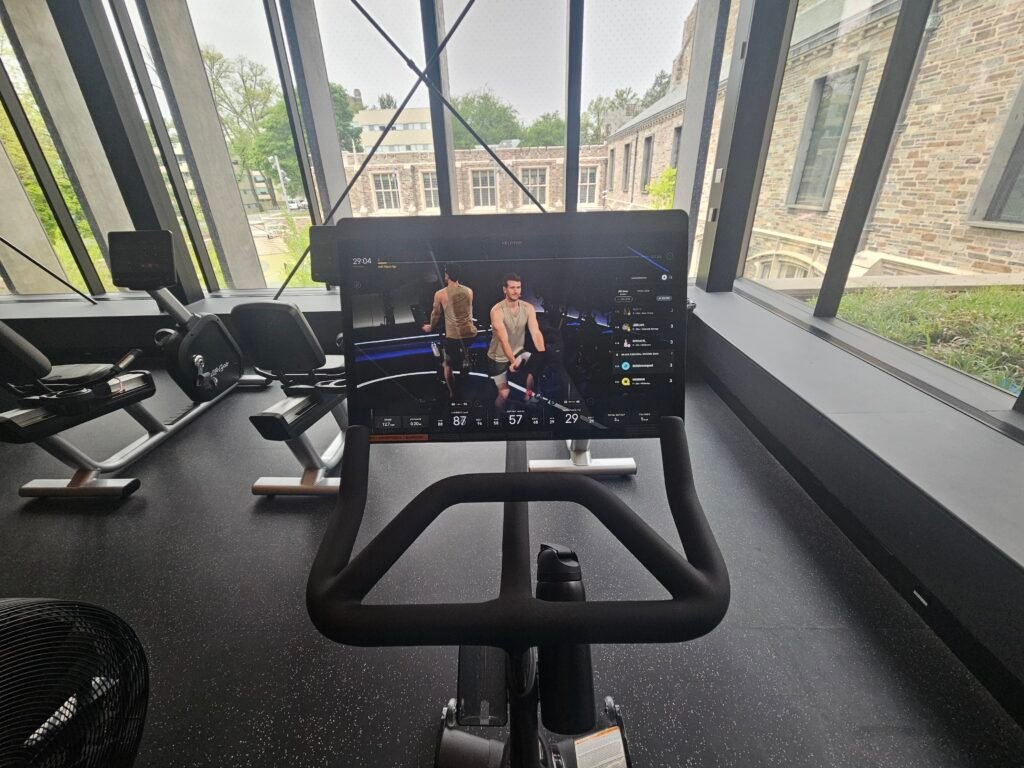
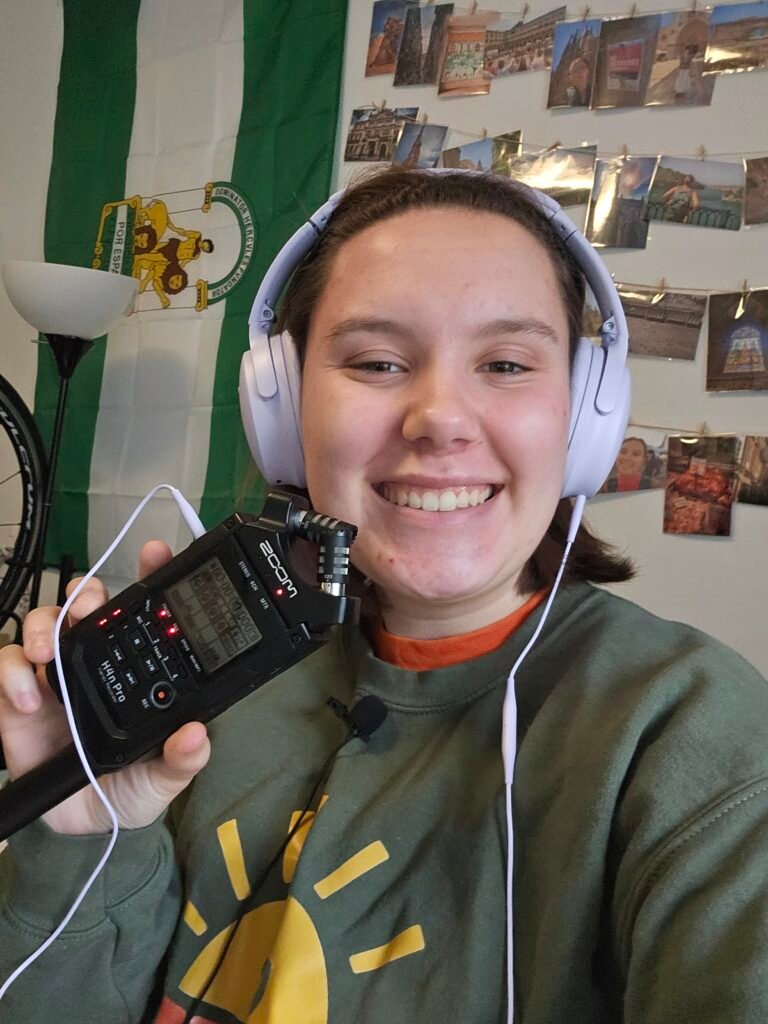
Building on your success this semester, you maintained your gym routine at least three times a week throughout the second half of the term. You declared sociology as your major with such confidence that you were on TigerHub at 8:00 a.m. the day it opened, practically jumping up and down. You also recorded an excellent oral history with Catalina from the Spanish department, successfully navigating the use of a complicated microphone, and built meaningful new friendships.
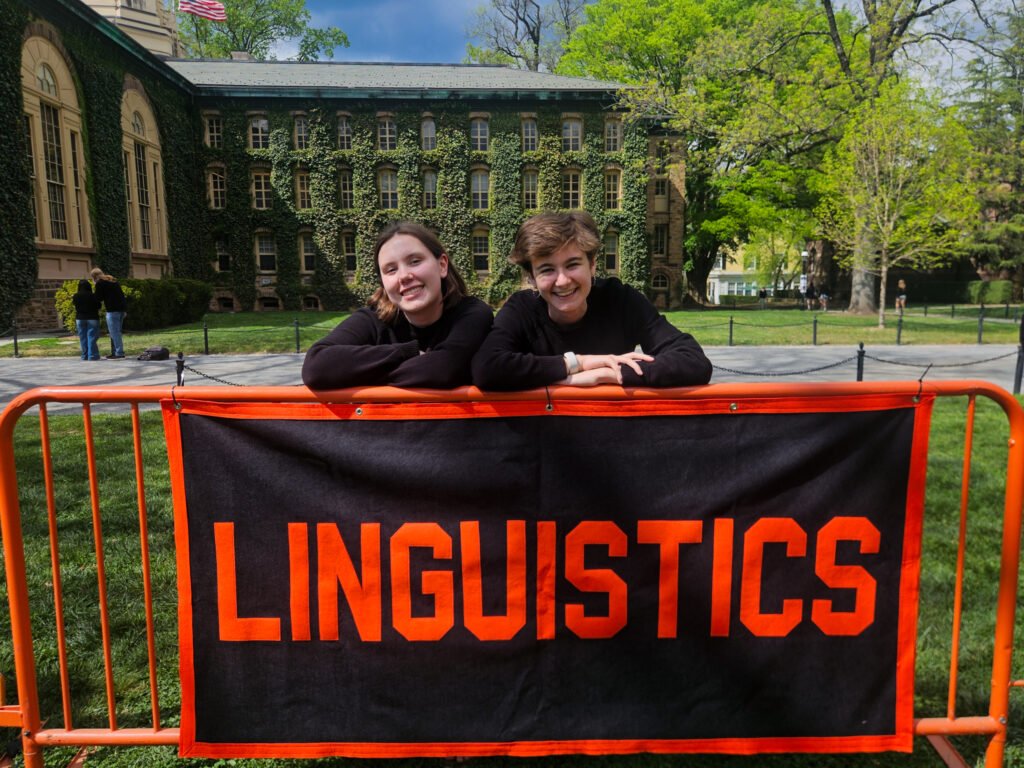
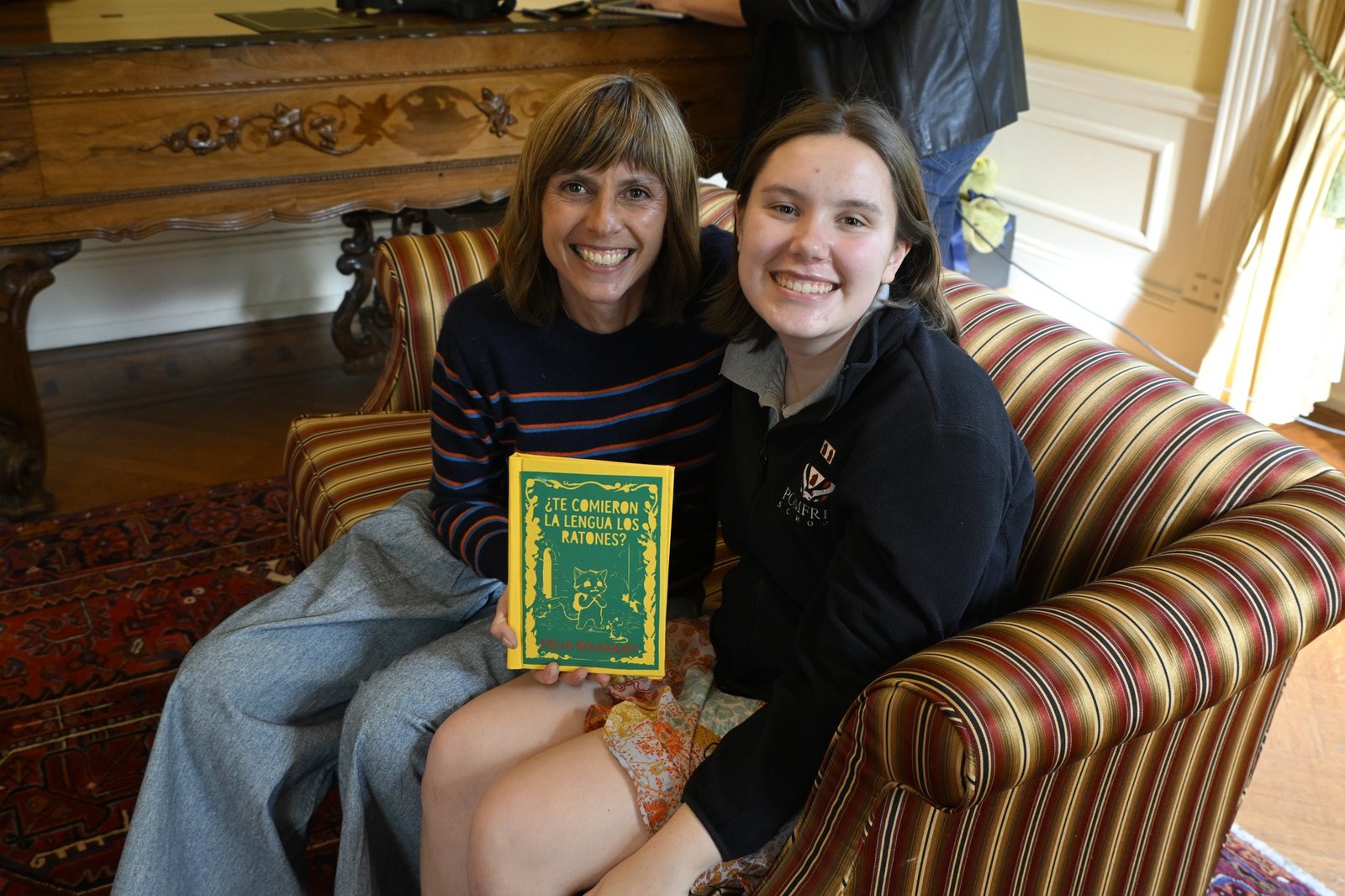
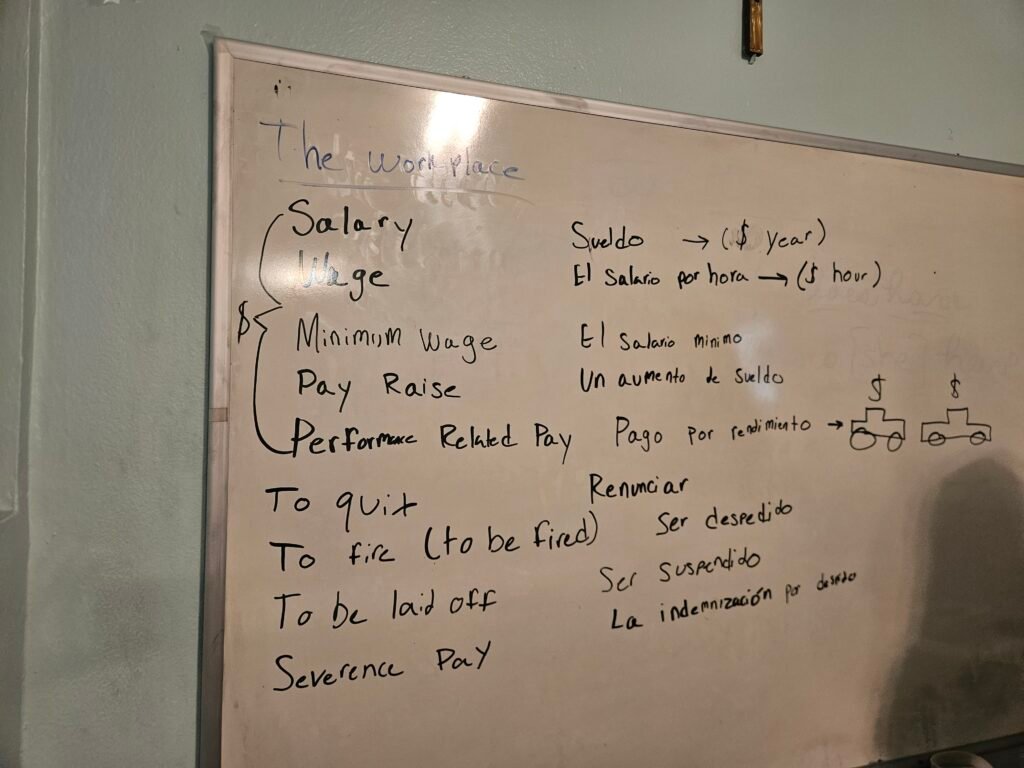
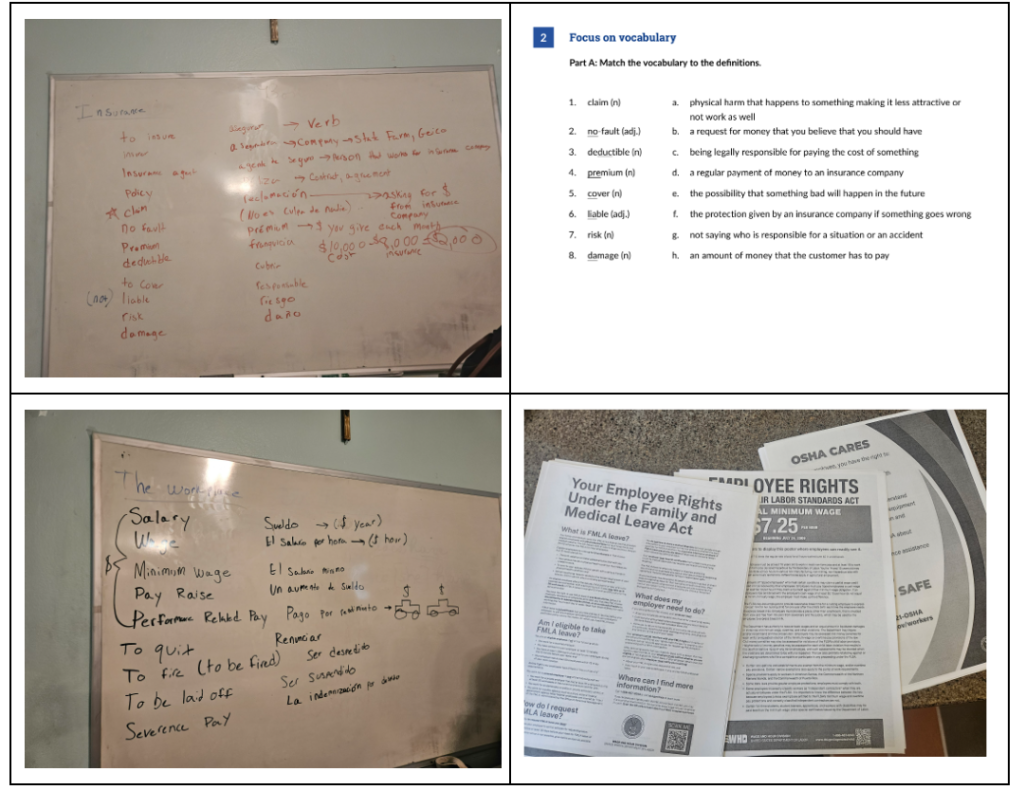
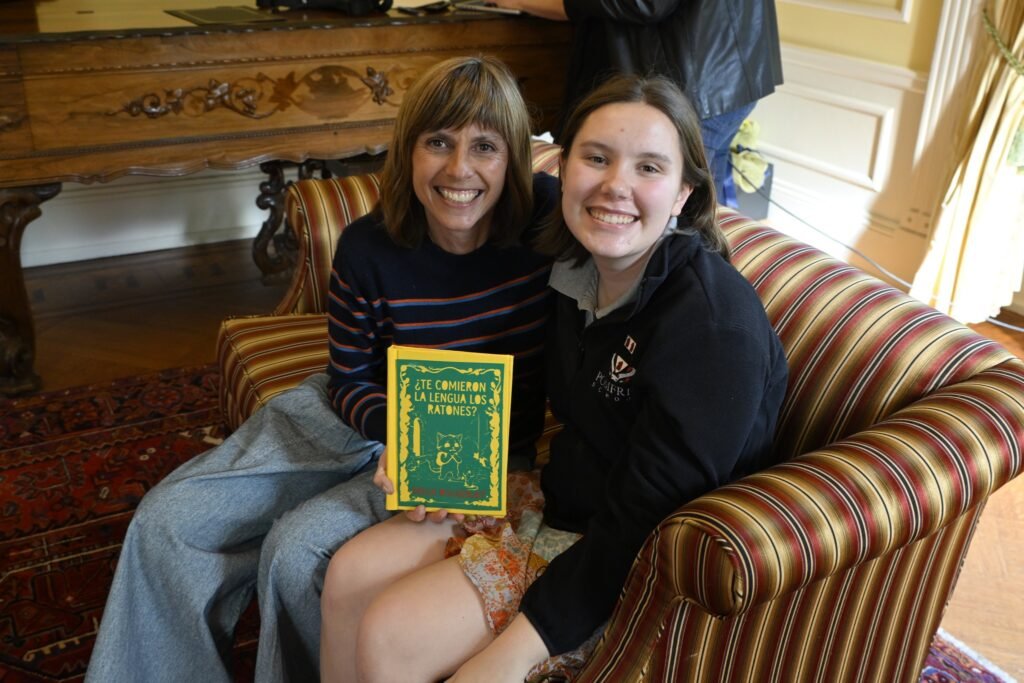
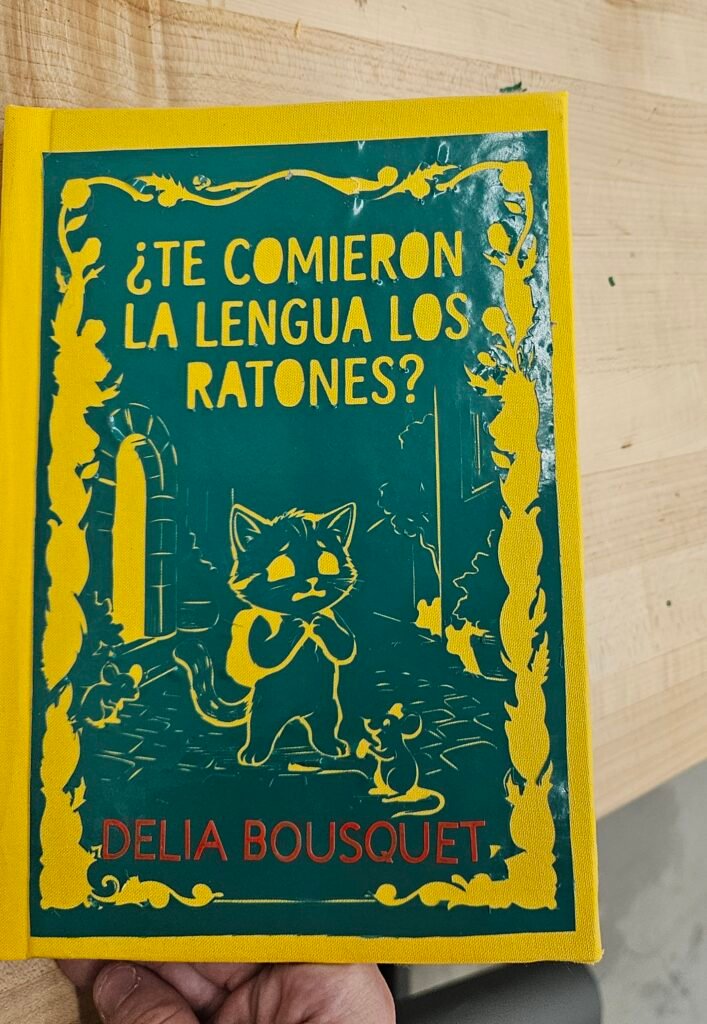
Furthermore, you transformed an ESL program, moving away from outdated textbooks filled with irrelevant information—such as an entire unit on curry, a concept unfamiliar to your students—to a curriculum focused on insurance, credit, loans, and workers’ rights. These lessons were vital; you discovered that every one of your students had experienced a car accident in the U.S. with varying degrees of success navigating the insurance system. While some held credit cards and others did not, all shared the dream of one day owning a home—a goal where credit is essential. Finally, you took creative risks by producing a unique “day in the life” video for the Spanish department and writing an entire children’s book for your final Spanish project.
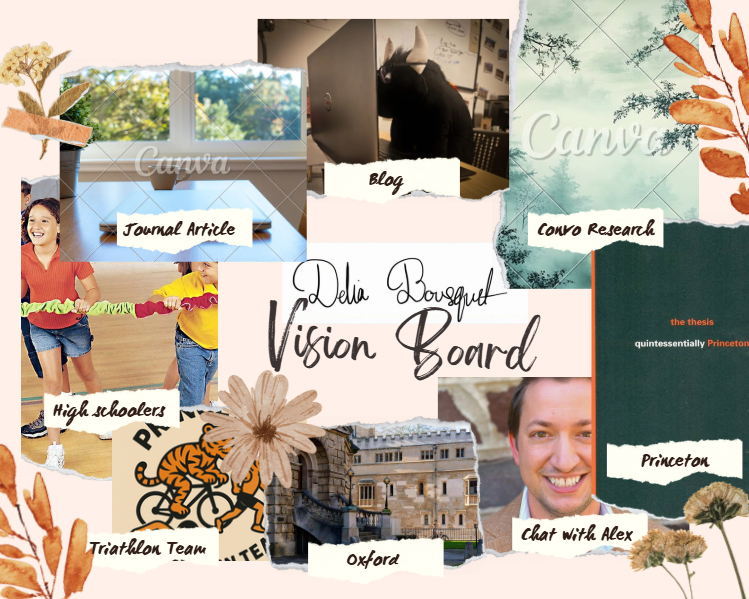
Looking back at your goals for this second half of sophomore year (from the end of WRI 235), I think you kind of nailed it.
Project:
- Secure IRB approval (for real this time).
This was done before the end of the fall semester.
- Track down those high schoolers and alumni. We’re aiming for ten conversations, and we will hit ten before returning in the spring.
You overachieved with this one, with 12 conversations with high schools and alumni before the start of WRI 236.
- Identify an academic conversation that genuinely excites you—something you want to think and write about.
More about this one later.
- Create a final project that actually matters at Ash Academy—not a “here’s what I noticed,” but a bulletproof, empathic, Princeton-caliber argument that offers real visibility to the people you interviewed.
It is fascinating to look back at these notes. I thought the “big idea” of centering students in my research emerged during the Week 5 workshops—specifically inspired by Alex’s drawing of how institutions provide a mold and students form peer networks. I realized the real story was in how they navigate both. That insight changed how I viewed the existing literature, which largely ignored student voices. As it turns out, I had already figured this out by the end of last semester; I just needed a reminder.
- Talk to Alex more. There is a direct statistical correlation between “talk to Alex” and “project gets exponentially better.”
I averaged every other week in office hours. I still agree there is a correlation between “talk to Alex” and “project improves”.
Intellectually:
- 2026 is the year of the journal article. Maybe not for our high schoolers, but I think your other research with inclusive language is going somewhere… let’s get something published!
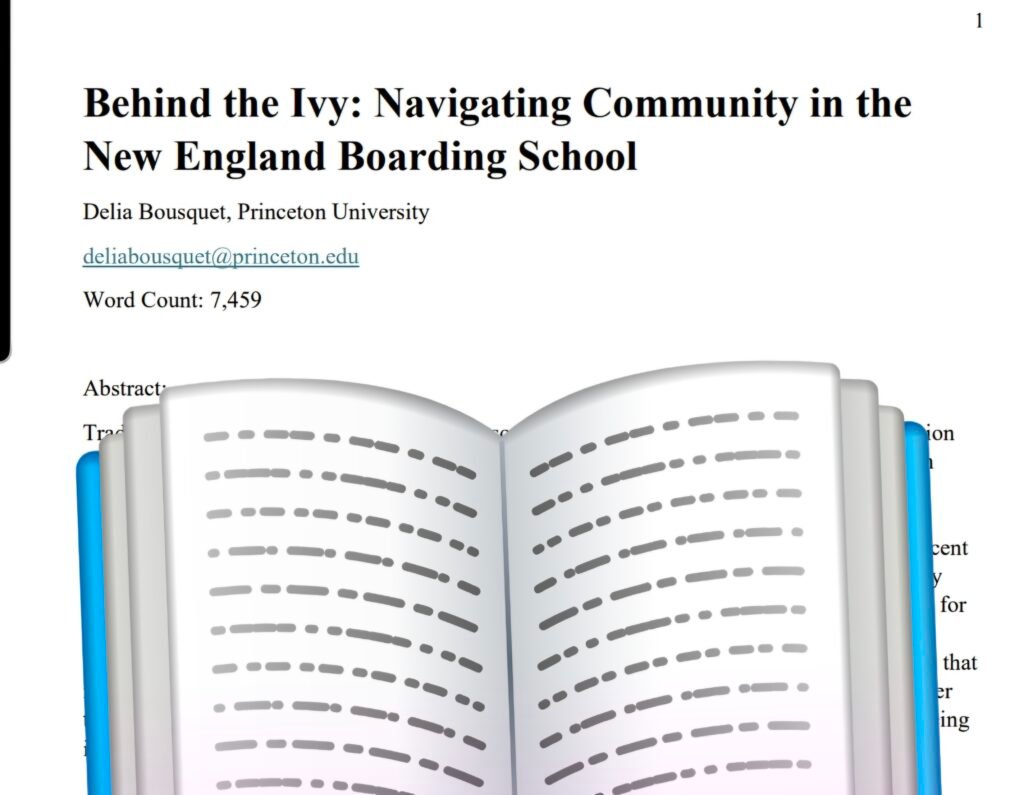
Well, the first draft of Behind the Ivy is written. Just have to finish it up this summer.
- Just write a lot of academic stuff. Practice makes perfect.
I think a 30-page double-spaced research article is evidence of this!
- Find academic subjects/topics that get you really excited and read about them.
My project!
- Maybe I’m getting a little ahead of myself here, but… Write the best senior thesis that Princeton has ever seen. Like some life-changing scholarship. (Maybe not a SMART goal in the sense of how would one even measure this, but I digress)
Still not here yet.
- Have a JP plan by summer and have a strong relationship with someone in my department who I want to oversee the project. → This one is going to be tough.
I still really don’t know any faculty from SOC very well. However, I was thinking about this the other day, and I think it would be super cool to write a JP on coffee culture. It was one of my original ideas I had for my WRI 235 project that I ended up abandoning. It still interests me, though. I still have time to figure it all out because the SOC JP schedule is terrible. We don’t get advisors until December, and all the planning goes on all fall!
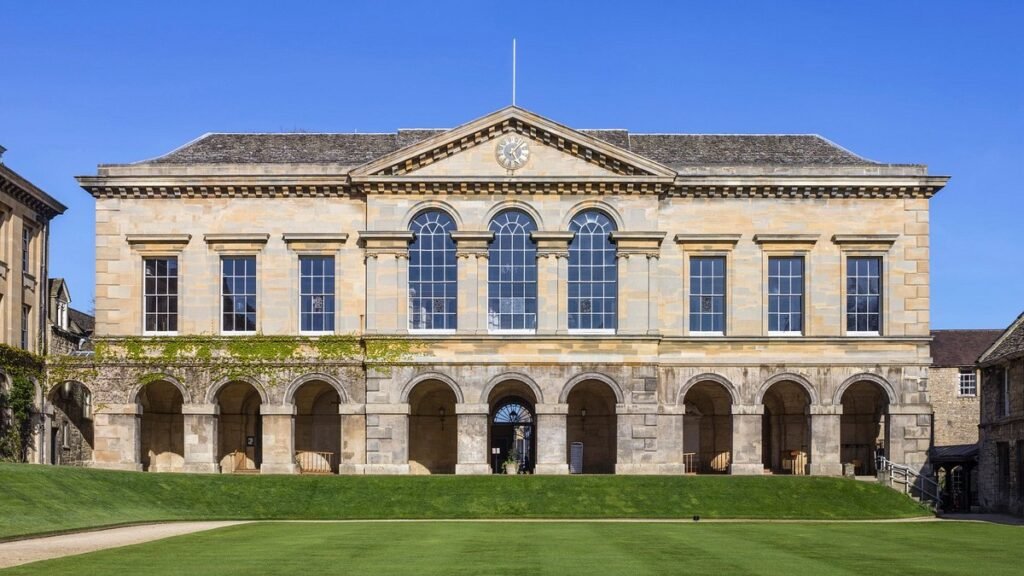
- To be studying at Oxford next school year!
Done!
- Get Princeton to give me a lot of money to go conduct research in Spain.
I think this will have to be a senior thesis kind of thing. I am going to Spain this summer, though.
- Figure out how to conduct research over the summer.
Does finishing up my WRI project count?
- Get into grad school #Dr.Delia (Is this too far in the future?)
Still working on this one.
Now, any good social science article has three main conclusions or takeaways, which in our case today are what I learned about research this semester. So here they are:
- The art/science of thematic coding and organizing all the codes well.
- The Lit review funnel.
- The importance of the scholarly community.
Now, I could go into a ton of evidence for these claims, but really, you (and Alex) already have entire documents and spreadsheets for all these claims. For number one, the art/science of thematic coding, you learned an entire qualitative coding software (MAXQDA) and created over 200 codes across 12 40+ page transcripts. You then took those codes and organized them into themes with your classmates and used Excel to organize your data to ensure you had a document with proof that you coded carefully (mostly because you were worried that one day someone would call you up and ask to prove the data for your journal article).
Secondly, the lit review. My main evidence to support that I learned something about lit reviews will be a paraphrased quote from Alex. You went to his office hours during your second week of lit review work, having a solid draft completed. After taking a quick look over your draft, he said, “Get out of my office and work on something else.” Before this meeting, you thoroughly worked on reading the literature, organizing all of the sources and key quotes into one document, you talked with Alex on how to funnel it the best, made an outline, and then finally painfully put it all together (the hardest part).
The importance of the scholarly community has become clear to me through two avenues: this class and my own research. I’ve conducted research in isolation before, and it was difficult to stay motivated; you face challenges alone and have no one to share them with. It can be a very lonely process. However, through this seminar, I had the chance to air my grievances—about everything from Stellic to the literature review—and connect with others, especially Casara, who was also on an “article-writing adventure” this term. Through this community, we were able to improve our research, stay motivated, solve problems together, and feel truly understood.
Similarly, my project demonstrated how community serves as a vital coping mechanism when life gets difficult. While boarding school students face a “triangle of tension” (Cookson)—squeezed by the institution, peer networks, and parents—(rest of sentence removed...you’ll have to wait until the paper is published to get all the details). In WRI 236, we were encouraged to do the same. Our projects didn’t need to be perfect; our mistakes were simply evidence that we were learning to be better scholars.
Future Research:
I feel like the large quest for this year was to answer the question: what is humanities (or really social science) research. And it is clear that this was not only answered and motivated through this seminar, but a quest I want to continue on for many more years to come.
Looking ahead to junior year, I am taking away a wealth of scholarly skills, including the qualitative interviewing techniques from WRI 235 that will certainly make an appearance in my Junior Paper. However, the most important lesson I hope to carry forward is to “do what makes you happy and brings you joy.”
Throughout our WRI 235 and 236 journeys, many of us felt we had to choose between being strictly academic or being creative. Whether we were choosing topics, methods, or payoffs, there was always a lingering question: “Am I going to do this academically or creatively?” While I chose the most “academic” path at every turn to master the journal article format, I realized along the way that academic rigor and creativity are not mutually exclusive. It is okay to study “non-academic” topics like food and actually enjoy it. The world needs research on those topics just as much as it needs research on chemistry.
While I have enjoyed my boarding school project, I think it has officially put a cap on a period of my life that I struggled to understand for so long. I now know myself better, and I know where I want to go. It feels as though a weight has been lifted, giving me the freedom to study whatever I choose. As I look toward my JP, I’m excited to explore topics like “coffee culture” (an idea from WRI 235 that still excites me) or anything else that sparks my curiosity.
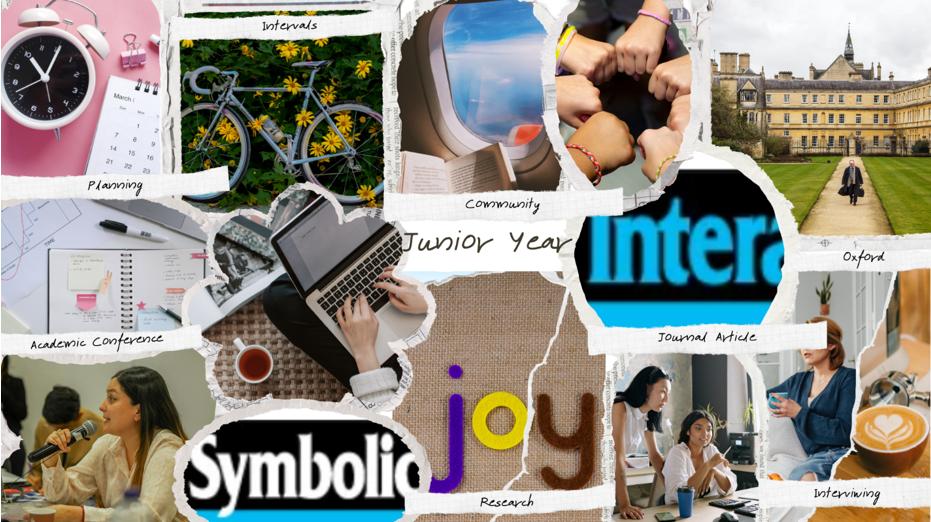
Goals and Vision
Finally, as is tradition, here are my goals for the coming year:
- Publish the Article: I have no doubt you will follow through with this, but I’m writing it down to make it official.
- Apply the “Interval” Format to the JP: I want my JP process to mirror the structure of this class. I thrive in a format of weekly assignments and incremental documents. As I said at our crepe meeting, life is a series of intervals, not a sprint. I know what the intervals are now; I just have to learn to be the coach this time around.
- Continue Building Community: I think forming a JP working group would be a fantastic way to stay motivated. Having dedicated time every week to discuss our work and support one another can only help.
- Seek Presentation Opportunities: If 2026 was the year of the journal article, perhaps 2027 will be the year I present at a professional academic conference—or at the very least, attend one to observe the field.
With that, I’ll leave you to it. Congratulations on a successful sophomore year, and I can’t wait to see all that you achieve next year!