November: A Thesis for Life
Hola, mis lectoras y lectores leales. Delia here, live from the very delayed Amtrak train on a chilly, dark November night to bring you all this month’s issue. And let me tell you, I think this is going to be a good one because this is the first and last time I have ever outlined a blog. Why? Because, as the title suggests, we’re not only getting into the weeds of academia, my research, and my life, but also welcoming you into it with a somewhat structured argument. And while I love my casual rants and the creative freedom I give myself when I write these blogs, with the impending finals season coming after this little Fall Break Part II, I need to get some somewhat structured ideas on the page in a low-stakes way. Or better put, I need to do some thinking.
Thanksgiving has always been such a weird holiday for me ever since starting prep school, and especially now in college. On a surface level, I really like Thanksgiving. It’s a time when families gather, share a delicious meal (at least delicious in my house), and talk. The thing that changed for me in prep school—and definitely in college—was that with so much of my time spent away from home, Thanksgiving suddenly becomes this moment, after months apart, when I’m faced with twenty-something people all asking the same question: How’s school?
To which I never know how to respond.
Like, they definitely don’t want “good,” the classic response my brother gives, which inevitably leads to a whole conversation about how he needs to go into more detail. But as someone who has been on the receiving end of my brother’s play-by-play of every single assignment, meeting, and office hour he’s attended, I can assure you they are also not looking for that. There’s also this performative aspect to it, where the answer has to be positive—or at least positive in the sense of, “At first it was hard, but now I’ve figured it all out and I’m doing fantastic.”
And every year, I’m just sitting there stuck, giving an answer I don’t actually like. So I’m setting out today with a two-fold motive: first, to answer the question “How’s school?”—or really, “How has the last month been?”—in a Thanksgiving-approved way; and second, as I mentioned at the start, to work through some ideas I’ve been wrestling with and hopefully tie everything together into what I’ve learned these past few months about myself, language, and sociology.
The Small Talk
To start off, let’s dive into that pre-dinner conversation.
First, some good news and life updates—in full LinkedIn fashion. I am happy to announce that I have started a position as a social media and events assistant with the Department of Spanish and Portuguese. Super excited about this one because, if you’ve been following along, this has been three months in the making. I’ve been looking for a job, and now I have one with a great department and great people, so I am content.
The second big piece of news I’m excited to share is that this winter break I’ll be making my debut into the professional world with an internship at a language-tech company that runs an online language learning platform and curriculum. In this role, I’ll, of course, be leveraging my bilingualism to help with their Spanish-language content and, I believe, running some student focus groups.
Now that I’ve hopefully proved myself a functional member of society—one who perhaps does not have a job anyone in my family can relate to, but a job nonetheless that appeals to those hard-working values while also giving me an outlet to seem successful—I pose our dinner conversation topic:
What does it mean to be visible?

Putting the Food on the Plate: Club Drama
You see, the past few weeks I’ve dealt with some challenges. Challenges that aren’t exactly Thanksgiving material, but are absolutely blog material. Let’s start with the first one: the Triathlon Team.
Now, if you recall, last time we chatted, the team was having—let’s call it—“showing up” issues. Those still have not resolved themselves, but we were at least meeting and practicing. And I know I’ve mentioned time being a potential problem, but ironically, the practices at 6:30 a.m. were the ones most people showed up for. And sure, I was annoyed that lots of people weren’t coming, but the real issue came a few weeks ago.
Back in September, I submitted the club for University recognition as an official organization, and not just my secret little operation running out of Dillon Pool and the art museum terrace. And because this student committee is… well… not great—and because they told me they can only review eight clubs a month, and October was full—they finally got around to my application right at the start of November.
This process wasn’t easy either. I had to write up a team constitution, answer a bunch of questions, and attend a meeting in a secret conference room in Frist which, for some odd reason, was conducted in the dark at night, with only the glow of the computer screen illuminating the committee’s faces. I fielded honestly too many questions with ease. Like I wrote in my last blog, this is not unfamiliar territory. Playing the captain/leader/organizer role with clubs was kind of my thing in high school—every single sports season and, you know, casually two robotics teams, often at the same time. Easy.
As for the complexities of Princeton students’ schedules? Well, I can’t control that. But in terms of what I could do as a leader, and the organization of the club, I was doing great.
Which brings us to our low.

After this committee meeting, the proposal had to go to the USG—the Undergraduate Student Government—aka a group of students who think they’re better than everyone else because they have some imaginary form of power socially constructed by the university and their social connections. (As you can see, I’m a little salty here.)
Anyway, the day after the meeting, I received this gem of an email from the head of the student clubs committee:
__________________________________________________________________________________________________________
Dear Princeton Triathlon Club,
I hope this email finds you well. Firstly, I want to extend our gratitude for your initiative in proposing a new club aimed at fostering community engagement within our university community. Upon careful review and consideration, the SGRC has decided not to approve the establishment of Princeton Triathlon Club at this time. Please know that this decision was not made lightly; rather, it stems from a desire to ensure that all clubs sanctioned by ODUS fulfill a unique and impactful role on campus.
Our deliberations focused on the long-term sustainability of your club. We noted that the projects your club plans to undertake require substantial support from Campus Rec. The committee is concerned about the feasibility of maintaining these projects without a permanent affiliation with the department. We recommend speaking to Campus Rec formally and asking if they can accommodate you as a club sport.
We remain optimistic about the potential of your proposal to enrich our university community. We invite you to view this decision not as a setback, but rather as an opportunity for refinement and growth.
Thank you once again for meeting with us, and we look forward to the possibility of reconsidering this club’s application in the future and witnessing the positive impact it may bring to our community. Please do not hesitate to reach out with any questions or concerns.
__________________________________________________________________________________________________________
Here’s the thing: to the outsider, this email seems perfectly normal and reasonable. But to me—the person who has built this entire thing piece by piece since last January—it felt like a direct insult not only to the work I put in, but to me and how I fit into the Princeton campus.

They knew—from the multitude of paperwork I had to submit and from that secret meeting in the dark—that I had already reached out to Club Sports last semester, where we were given a hard no. Not because it wasn’t a good idea, but because Club Sports had been “maxed out.” They were not able or willing to add another sport. I said okay and shrugged it off, even though they inconsistently count sports like soccer twice (men’s and women’s), yet for sports like swimming, running, and cycling, they only count them once. Or how there’s a men’s ultimate team and a mixed ultimate team, which obviously gives men the advantage of joining two teams while women get one. Or the fact that women’s wrestling needs to be separated from wrestling in general. Or the fact that I would love to be on the ski team, yet there’s a critical problem: they don’t meet or compete or literally do anything.
And why is ballroom dancing a club sport? All the other dance groups are clubs, not sports. And how the heck is equestrian working? Don’t you need your own horse? Are people bringing their horses to Princeton?
Now, the point of my argument is not to call out issues with the other club sports—I’m glad they’re all recognized by the University. The point is that there is no organized system dividing genders or defining what counts as a sport. So to claim they have “no room for another sport” when the system has no rules makes zero sense.
Second, there’s the point about the club’s sustainability. During the meeting in the dark, I went over how we’d had practices for two months and explained everything we’d been doing—swimming twice a week at Dillon at 6:30 a.m., plus our bike rides and outdoor runs. To which one committee member asked, “Well, it sounds like you’re managing perfectly well. What do you need us for?”
Now, as a person taking a linguistics class, I can tell you there is a presupposition embedded in that sentence—the assumption that the club is going fine without support. So to then go back and say, “Oh well, we’re not going to give you club status because we fear for the sustainability of your club,” directly contradicts their prior point.
Which brings us back to our research question: What does it mean to be visible?
And what I told the committee in that meeting when they asked why I wanted club status if I was managing fine alone. I told them that I wanted to be able to solicit at the club fair and to have the ability to meet inside buildings so that I didn’t have to keep holding informational meetings and workshops outside the art museum. They told me that seemed perfectly reasonable.
I wasn’t asking for money or support. I was seeking recognition—visibility. A platform. It almost works like a trade: the University gives us visibility, and in return, we give them visibility. A mutual acknowledgment. A sort of I see you if you see me. After all, why would I want to represent the University on a national—or potentially world—stage on my triathlon suit if they don’t recognize me? I wouldn’t.
And on a personal level, it hurt. Especially because the University website claims:
Perform slam poetry. Make chocolate. Tutor elementary school children. Sing with an a cappella group. Write for a literary publication. Learn the science of beekeeping. Run for an elected office. These are just a handful of the hundreds of eclectic student activities at Princeton. Whatever your interests are now, or whatever new ones you discover once on campus, Princeton offers extracurricular organizations, clubs and centers for you.”
Clearly not for me.

Because while almost every other Ivy League university offers a triathlon club team—and triathlon is a new NCAA sport that I was actively recruited for before coming to Princeton—and despite the fact that I wrote my main application essay about my experience growing up competing from age five to winning a national title, not to mention my published book about triathlon, it felt like a slap in the face. Like: Princeton is for everyone… except you.
Like: you need to be unique and sell us on your one-of-a-kind perspective to get here, but once you arrive, good luck finding your place or your people.
I’m sorry I don’t dance, sing a cappella, or practice a religion—which seems to be the basis of 90 percent of the groups on campus—but you chose me to come to Princeton to be Delia. And Delia will NOT be joining any of those named organizations for the rest of her time here.
It was in that moment—when I felt so invisible, so alone, so bored, staring at the ceiling of my tiny dorm room (which I find myself doing a lot these days because, frankly, I’m bored)—that webs of scholarship suddenly seemed to start making sense.
Okay, that’s not true at all. I wish it happened like that. The reality was a lot more non-chronological.
The Start of Dinner: Conversational Research
Coming out of fall break, I was super excited to get into my research for my class Is Talk Cheap, where I’m conducting an independent project on how boarding school students understand and interpret their school communities. The project had just been approved by the Institutional Review Board—henceforth, the IRB—meaning it was ethically sound and not going to cause any of these students lifelong trauma, so I was ready to get started.
I started off strong, getting two conversations (they don’t like it when we use the word interviews) done. And then I was stuck for three—almost four—weeks. I was being ghosted. People were flaking. And let me tell you, as of this past Monday, I was done with the project. Done sending emails people weren’t responding to, done getting ghosted, done waiting for replies that never came.
Plus, the main goal of the class is not the research output—it’s to improve our skills as researchers and conversationalists. So by not doing these interviews, I felt like I wasn’t getting any of the personal skill gains that my classmates seemed to be getting.
This past week, I finally had my third interview scheduled (out of the six we’re supposed to complete by the end of the semester), so I was getting super anxious about making it the best conversation ever—one that did everything we’ve learned all semester and more. After all, I needed data not only for the project, but also for our big final, where we’ll be writing about our personal growth and skill improvement as conversational researchers.
And that’s when my vision board found me.
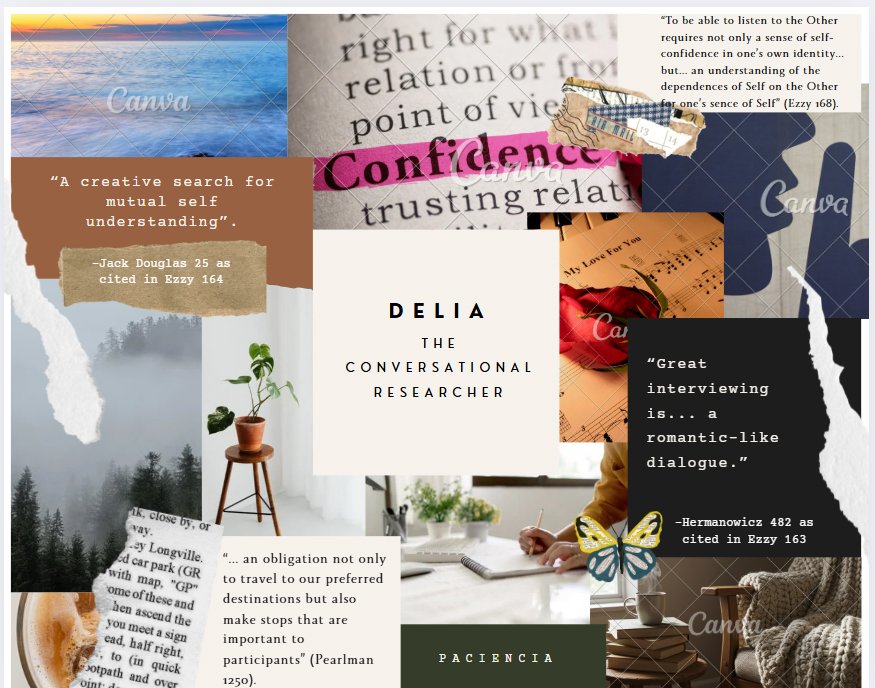
I forget exactly what I was doing—maybe searching for the consent form to send, or some journal article—but I scrolled far enough down in my files to see the vision board I was required to make as a homework assignment for this very class.
Now, there are parts of this class that have seriously made me question what is going on in my education. For example, one class where we sat in a circle on the floor. Or my personal favorite: the day we discussed how to prepare for an interview/conversation. I raised my hand and confidently said what I thought was a reasonable answer: review the interview guide (our list of questions) and reflect on the goals of the project.
I was quickly shot down and given the “gift” of an hour and twenty–minute class where we sat in a circle (in chairs this time) doing breathing exercises and making weird noises. It was… quite odd. But now I can say, with confidence, that I could start a YouTube channel about Yoga Breathwork for Researchers.
Anyway, the thing about this class is that, in the moment, a lot of it feels really odd—not “dumb,” exactly, but like a reflective moment where you genuinely ask yourself, How is this my life? But memory is such a weird thing. And while you might not need a strange vision board or the knowledge of how to “breathe into your spine” in that exact moment, these little life lessons seem to find you exactly when you need them.
My vision board—and the required readings—found me right when I needed them.
As you can see, parts of this vision board have some odd quotes. But I want to call attention to one in particular:
“It (conversational research) requires a recognition that the subject is both independent of the Other and that this independence is dependent on the Other recognizing the subject.”
—Ezzy
And I don’t know what it was about this random Monday night that made me understand this quote, the work of conversational research, and also have a revelation about my other research on inclusive language—and life in general—but I went back to that article and read it with a whole new purpose, noting down everything similar to this quote that was sticking with me.
Ezzy explains, “To be able to listen to the Other requires not only a sense of self-confidence in one’s own identity, as against the difference of the Other, but it also requires, according to Benjamin and Irigaray, an understanding of the dependence of Self on the Other for one’s sense of self. Such openness to the Other is a gift—it allows Self to be transformed through recognizing and validating the Other. This understanding of interviewing goes beyond the idea that meaning is co-created during the interview (Holstein & Gubrium, 1995). It is not only the interviewee’s cognitively articulated sense of self, and the story they tell, that is co-created, but it is also the emotional framing of the story that is co-created, shaped by the emotional stances of the interviewer and interviewee.”
In other words, to understand our conversational partners we need to know ourselves, and to know ourselves we need to be visible, in a way that I see you and you see me and we collectively acknowledge each other’s existence and unique gift of perspective.
And that’s exactly when I started to feel empowered—that my life and individual experience are uniquely valuable in themselves—and Princeton’s failure to recognize the club and me was on them. In turn, if I was denied that respect, they didn’t deserve mine.
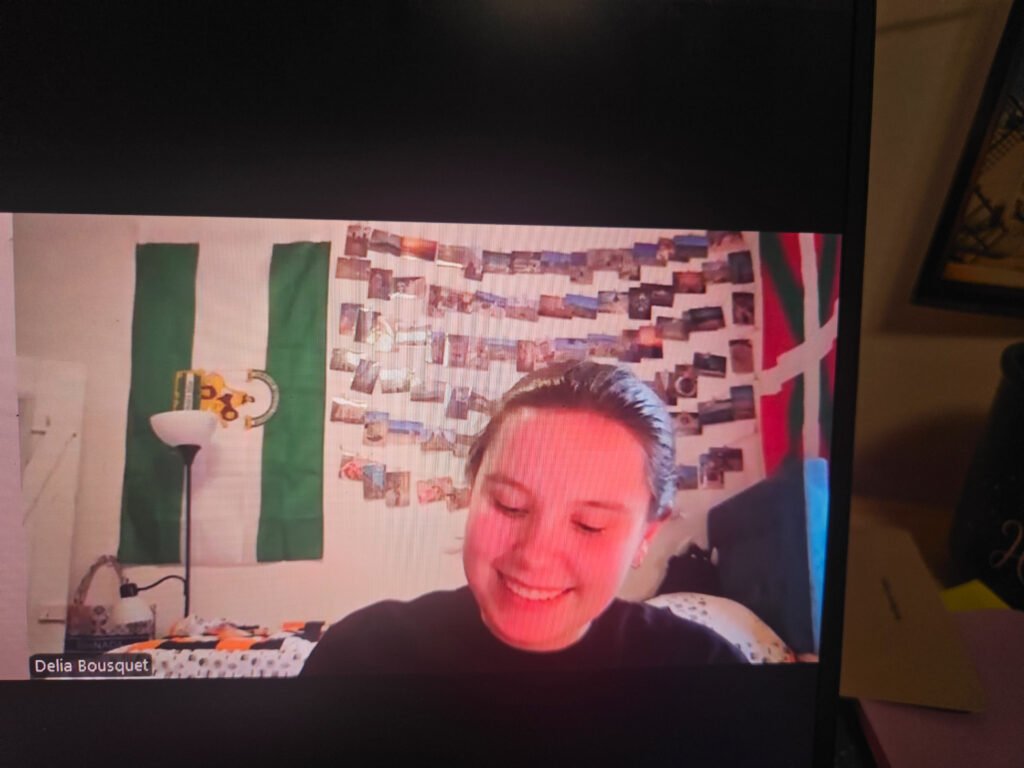
At the same time, my entire interview practice shifted… dramatically. While I truly, in the first interviews, tried to “play” the role of a therapist or at least give the vibe of a therapist’s safe-space office, the key word was play, not embody.
It was in this moment—and the convenience of me spilling coffee all over my bed and shelf by accident—that I tore apart my small dorm room and moved everything, resulting in a heavenly, safe space for group exploration of stories and emotions, but also for the pursuit of knowledge. This is where I arrived at a big revelation academically, but I’ll hold off until mid-dinner for that one.
So, prepping and executing this interview, I didn’t do any breathing exercises (sorry Alex if you’re reading this). But I came into it with gratitude, a mug full of freshly brewed espresso, some milk, and a comforting amount of Cola Cao, with all the warm lights on in my room and the comfortable pillows out. I even found myself trying to make it seem like a normalish interaction. I was still making my coffee as my convo partner entered my Zoom room, and we made small talk as I finished dumping the milk into my coffee, effectively opening up and giving the space depth and meaning. Like I wasn’t just a video staring back; I was embodying space with me and my story and hoping to welcome the other in.
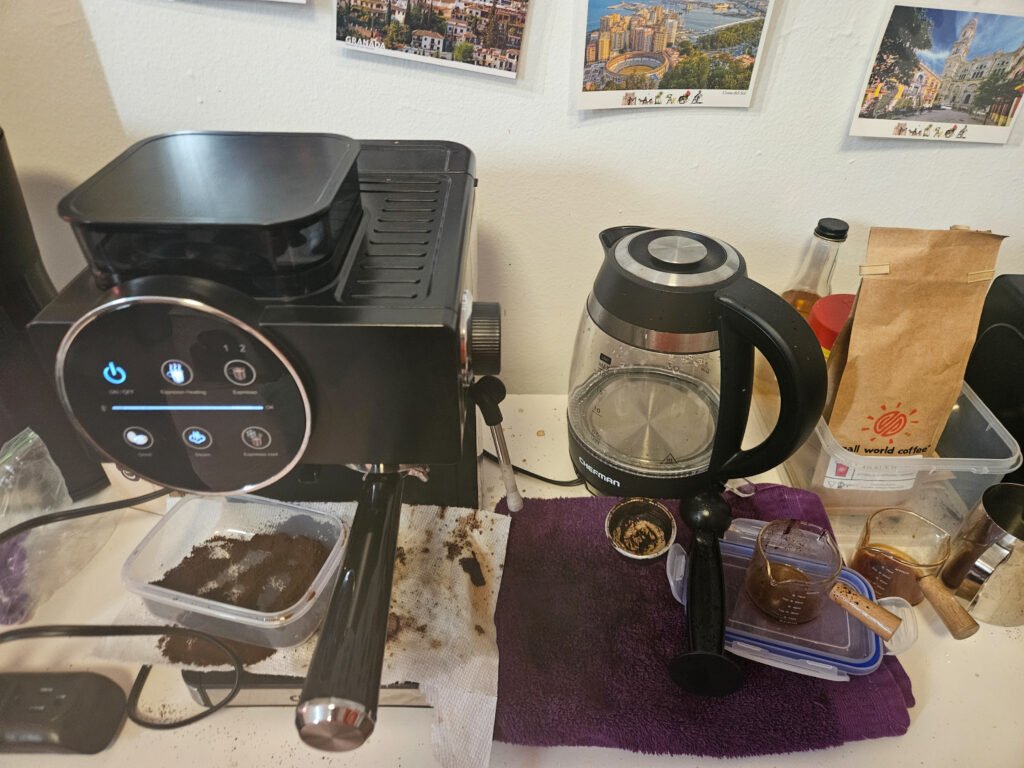
I started this interview like no other. And to steal my own words, “…just to emphasize this, there’s no, like, ‘right’ answers. Like this entire thing is just… I want to know your experience. I’m giving you the reins. I’m just here to listen… like I just want to—I want to get to know you…”
Now, I as a researcher can’t be certain if it was these small changes and overall just a lot more explanatory probes that took this interview from my dreams to a reality, where after we finished the recording, my convo partner mentioned that it kind of felt like a therapy session—but it was a step in the right direction. Creating visibility led to vulnerability and getting to know this person on such a deep level, to the point where post-interview, in my required reflection, I went on for almost ten minutes talking about how grateful I was to be part of this moment. Like this was really my convo partner’s moment, and I was just glad to have been there and gotten this window into their lived experience. It was empowering for me, and I imagine my convo partner, who continued chatting with me long beyond the end of the “official work.”
Which brings me back to: what does it mean to be visible? Visible requires an individuality to it. Like, my preconceived notions of you as a boarding school student—my experience there, or what I’ve seen in the media—are put on hold. I know where I stand in regard to you on a theoretical level, and I ignore that. I give you the choice to share with me what you want, and my job as the researcher is not to judge, but to raise up and empower those who choose to tell me their story.
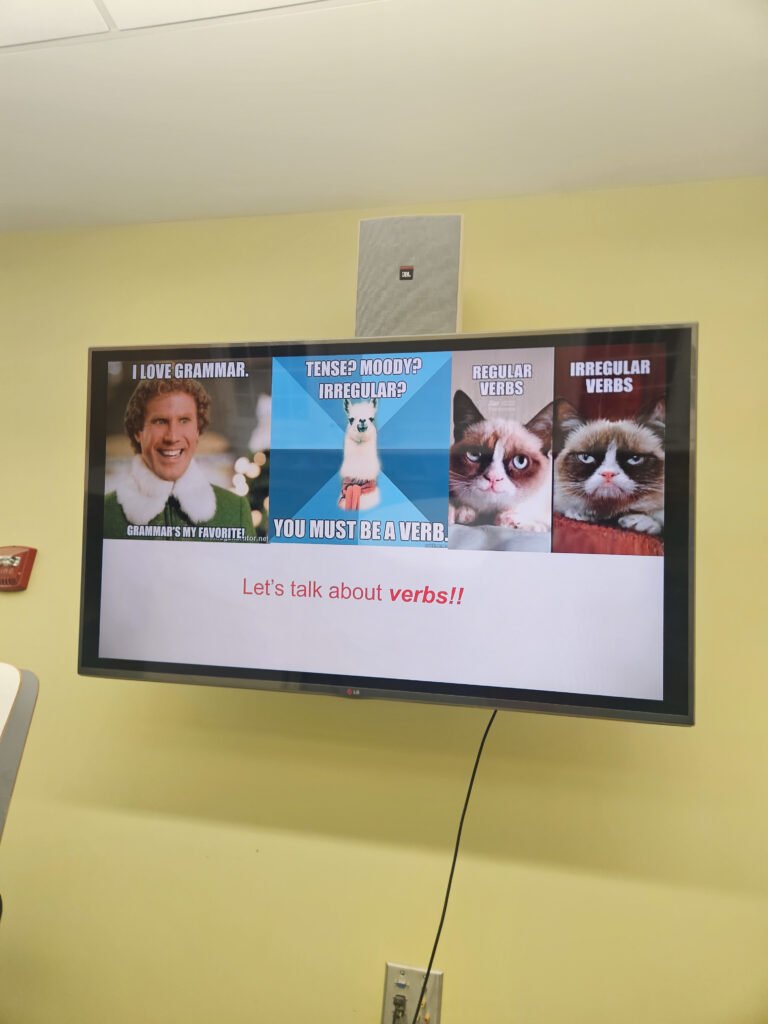
Which finally brought me back to inclusive language, which has been my life this entire semester through what can best be described as rummaging through probably around 30 library books, plus so many journal articles at this point I can’t keep track (I should be keeping better track—another lesson I learned, but that’s another story for another day). For the sake of simplicity, and avoiding a long boring literature review, I’m going to say the failure of the inclusive language movement is that it has, for the most part, been stuck within the confines of university gates and social media.
The thing is, when we encounter the inclusive language movement, we usually find statements such as “seeking to give women and non-binary people visibility.” The idea is that Spanish, which relies heavily on generic masculine forms such as todos (meaning all men or “everyone” in general), could be more inclusively used by including both the masculine and feminine forms such as todos y todas, or a form that doesn’t directly mark gender like todxs, todes, or tod@s. And while I’m not going to get into the entire debate regarding who likes which forms of words, I am going to dive into the Royal Spanish Academy a little bit.
The fact of the matter is that while the Spanish Academy says they don’t impose language, they just describe it, people have internalized the Academy as such a powerful entity that it becomes the justification of all language. What I mean by that is: when we look at the common arguments against inclusive language, one of the main ideas that sticks out is what is considered “grammatical,” which is then deflected to the Academy. One notable example is Argentina, who wrote a law to ban its use in schools simply because the RAE said it was ungrammatical—and that was reason enough to potentially explain the drop in reading scores (which is not supported by any data or actual research). Now, if I were going to fully argue this point, I’d probably cite a few more key countries, politicians, organizations, or journalists that deflect the argument of inclusive language back to the Academy, but this isn’t my journal article and really not the point I’m getting at in this blog.
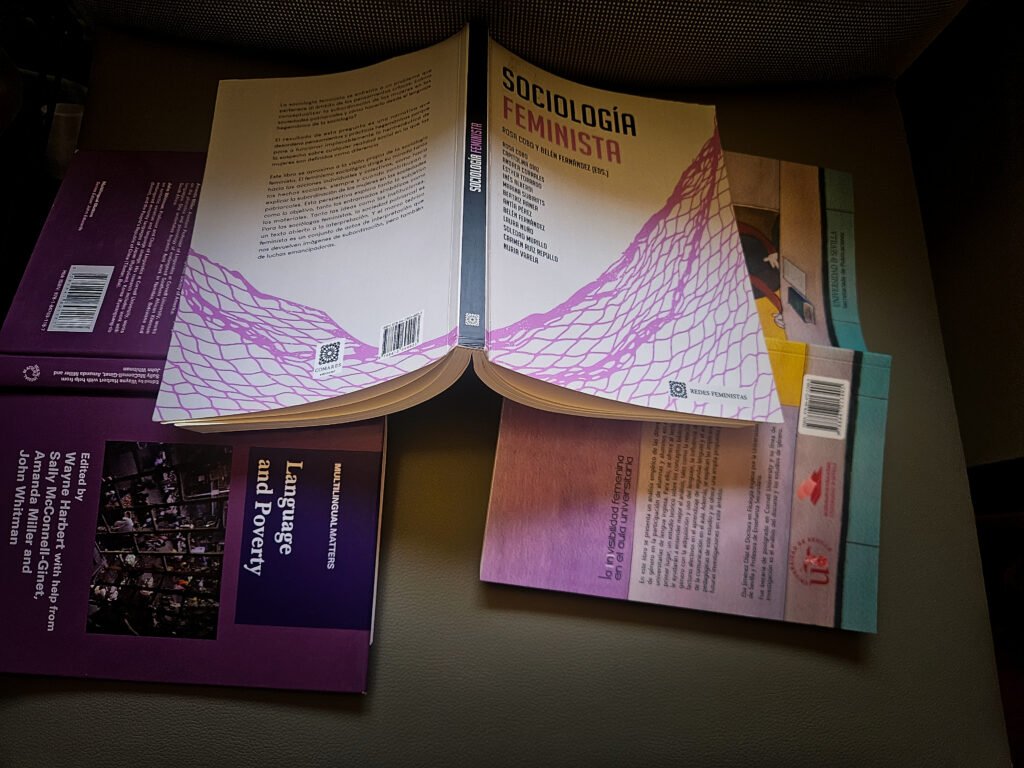
The point is that the inclusive language movement seeks to give women and those who don’t identify as the generic masculine visibility. And we’ve established from our friends in the social sciences—and from my life experiences—that visibility means… what? Visibility requires an individuality to it. Like, my preconceived notions of you as a boarding school student—my experience there, or what I’ve seen in the media—are put on hold. I know where I stand in regard to you on a theoretical level, and I ignore that. I give you the choice to share with me what you want, and my job as the researcher is not to judge but to raise up and empower those who choose to tell me their story.
It means being truly reflective and recognizing that speakers have a choice to use it if they want. It means seeing these speakers as empowered and individual. Setting aside the science of language and realizing that we all have our own way of using language. My accent is different than yours. I use words in different patterns than you do. But my job as a so-called descriptive linguist is to do just that: to describe.
Yet, when we look at all the Academy has done—publishing informe after informe, denouncing not only inclusive language but other dialects and words (which have been widely studied and found to be, in fact, prescriptive, not descriptive)—along with the objectives of the Academy to be “a centralizing place of linguistic authority,” which, if this were a strict article, I would go into in detail… but again, not the point here.
The point is that, as Martin Pütz argues in his paper regarding language, “Speakers, rather than just being the bearers of abstract structures removed from conscious reflection constraining their speech behaviour, are active, knowledgeable, purposeful agents who make choices whenever they use language”… but “social norms are restrictions on individual choices, making deviations that imperil communication unacceptable, if not impossible.”
In this way, the mission of creating visibility and empowering individual speakers directly contradicts the core mission of the RAE, which is to centralize language into a unified standard. So is it really surprising that the RAE would denounce the inclusive language movement? No. Because at the end of the day, it’s not about language—it’s about who holds the power.
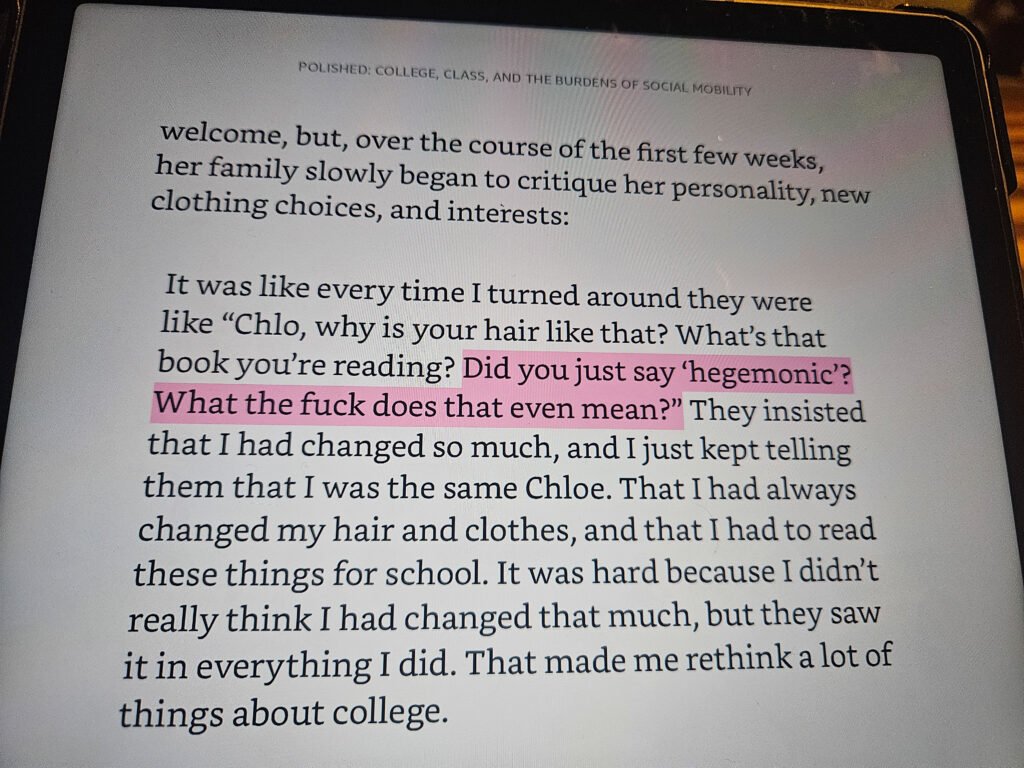
So what does it mean to be visible? It means having power and a platform. But not only that: it means standing for the visibility of others and recognizing that visibility is granted not by linguistic authorities, but by fellow speakers. It requires an individual commitment to engage critically with language, to understand that every word is a choice, and to take responsibility for those choices. And, circling back to Ezzy, it means realizing that you will be granted choice and freedom by granting the same to others. Because, returning to my own qualms with Princeton—why would I recognize you if you don’t recognize me? I wouldn’t.
And I don’t know about you, but I find that intellectually empowering. Now, is it actually possible in real life to engage critically with discourse at the level of individual words and grammar? I’m sure language teachers would (and have—see Bilbao Terreros) argue yes. But once again, this requires learning how to do that: how to question why we say what we say and what purpose it serves. It requires refusing the so-called thought-terminating clichés, whether they are dehumanizing, lump the “other” into a monolithic group (as I was tempted to do in my boarding school project), express violence, or simply defer to authority. It is never enough to say your explanation is “because X said so.” Look around at the world, where fake news spreads like wildfire. We must interrogate everything critically, because what is the alternative? A handful of people telling us how to live our lives.
And I don’t know about you, but I still don’t think Princeton was right about my triathlon club.
Dessert
So that’s my main argument: if photography is about seeing beauty in others, language is about seeing the beauty inside. But along the way, I’ve collected a few side quests—little lessons that have shaped how I understand scholarship, language, and life. Here they are.
- Take care of your workspace—your brain.
So much critical thinking and writing happens entirely in your head. As a scholar (and honestly, as a person), you have to protect your mental space and take care of your mental health. Maybe not a lesson I learned this semester, but it fits the theme, and it definitely came up in class. - Set personal goals, and be selfish.
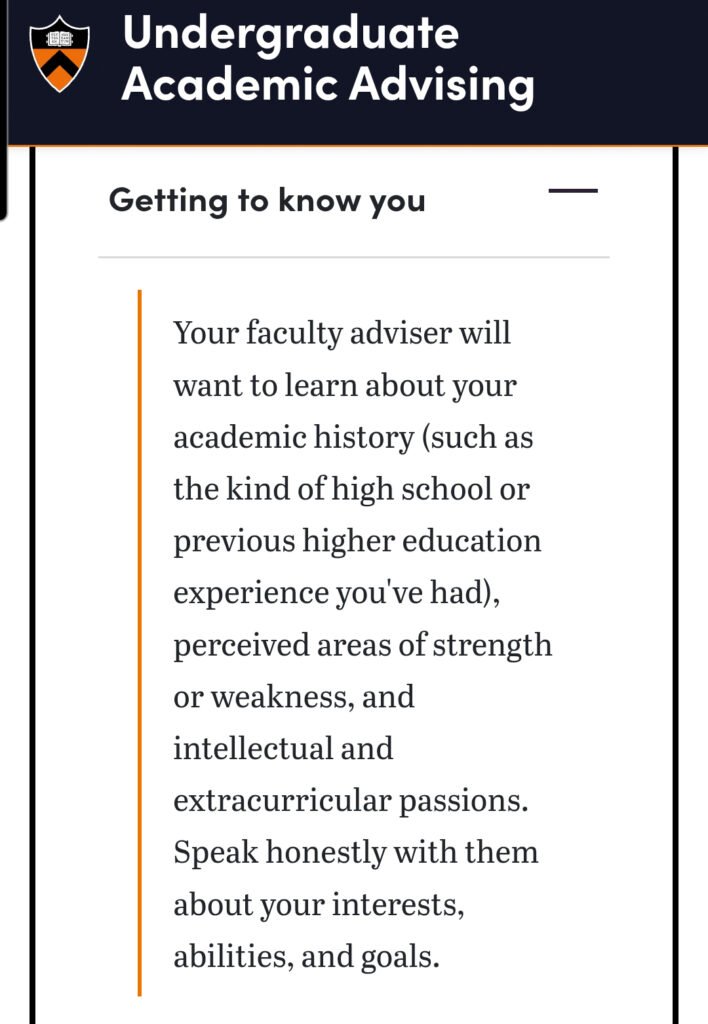
Yes, see and respect others—but part of having power and choice is doing things for yourself. Don’t wait for Princeton to approve your triathlon team. Don’t wait for your academic advisor to actually give you advice. I promise you: after three semesters and three different advisors, I once hit an all-time record of a two-minute advising meeting. My brand-new advisor opened with something like, “This is the last time we’ll be meeting,” and I was sitting there thinking, Dude, we have literally never met.
Free will exists. Go write a journal article in your dorm room. (Okay, maybe that one is specific to me, but you get the idea.)
3. Be bold.
Once you accept that every choice is an argument, everything becomes an opinion, a claim, a stance. And that’s terrifying. It’s so terrifying that I once wrote an entire paper with zero arguments in it. (Thank God it wasn’t for a class.)
4. Protect your intellectual work.
Part of being “selfish” is recognizing that if you aren’t protective of your work, someone else will be—on your behalf, and not in a good way. Whether it’s photos, Starbucks-themed ESL slides, ideas, or words: protect them. Individuality also means valuing your own voice. And there’s only one you.
5. Who you cite says something about you.
Citations extend your voice. They’re not just references; they’re affiliations. Ask yourself before you publish: Is this someone I want to stand next to?
6. Choose people who care about you.
I will pick the advisor who is a good human being and genuinely cares about me every single time over the Nobel Prize winner. Be selfish. Set your goals, and then find people who actually care about you along the way. Scholarship has a layer of trust to it—just like conversational research. Why would I trust your advice if you don’t know me and I don’t know you?
7. Practice makes… improvement.
Conversational research—and writing a journal article alone (well, not totally alone; shout-out to my book How to Write a Journal Article in 12 Weeks)—is like learning to row. At first it’s awkward, oars are flying everywhere, the boat is tipping, and you’re sure you’re about to sink. You think, People race like this?
And then, years later, it becomes muscle memory. For the record, in this metaphor, my oars are still splashing, the boat is definitely tipping, but I am very determinedly shoveling the water out.

8. Give yourself the same energy you’d give someone else.
Honestly, this one explains itself.
9. See people as verbs, not nouns.
Stop with the labeling, the grouping, the categories. We’re all works in progress. English desperately needs more verbs—we’re verb-poor. (I don’t have the statistics, but I stand by this claim.)
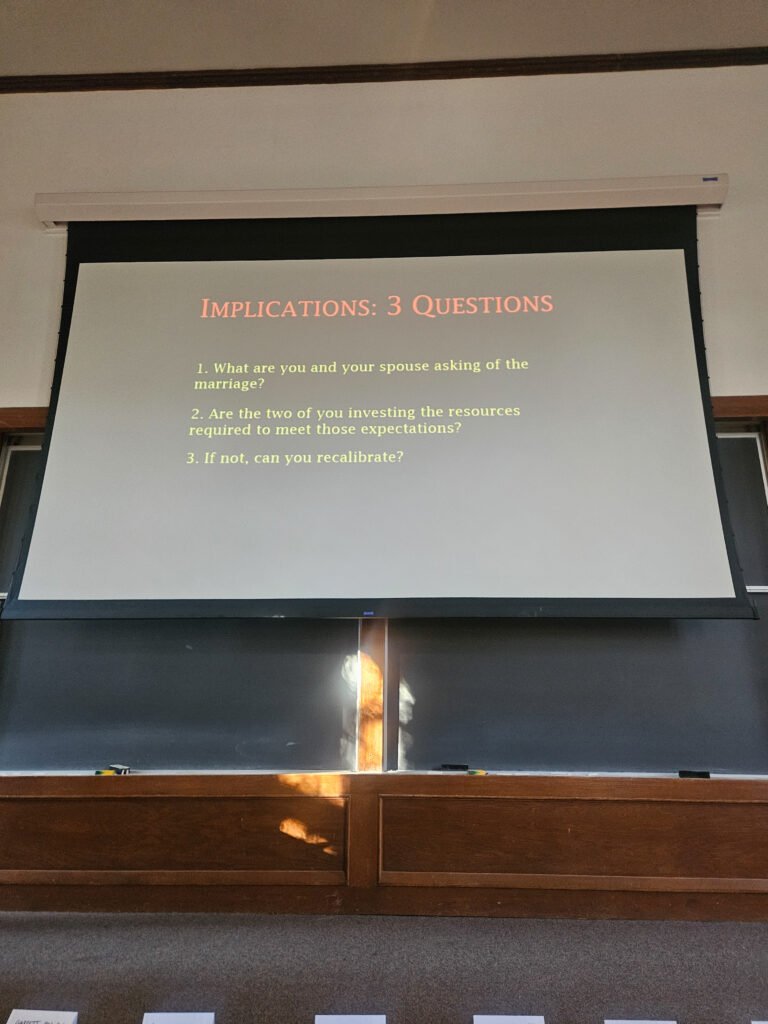
10. If you want marriage advice, I’m now fully certified thanks to Sociology 101.
Just kidding. Kind of. I do have a 98-point-something in the class.
And finally—because would it really be Thanksgiving if everyone didn’t go home angry at each other after someone crossed the line into “too political”?—I have to address a post one of my “friends” made on Facebook. It was a video of a particular political figure beginning a speech with: “We have a need for 500,000 electricians. We do not need more sociologists.” He then goes on to say that sociology majors will become baristas.
Now, sure, I could entertain that argument, but I’ll leave it to you to investigate—using your newfound empowerment to listen, to understand, and to make your own choice. But just know this: your choice, whatever it may be, and the fact that you even get to engage with the argument, is sociology. And in a free world, we all must be sociologists. Maybe having a few more people who actually read the literature wouldn’t be such a bad thing.
Also, for the record, analyzing job disparity and figuring out why we suddenly need so many electricians… is literally the work of a sociologist.
So that’s all I’ve got for you. Did I successfully get this down to an answer I can give my relatives when they ask, “So how’s school going?” this Thanksgiving? Well, nine pages later… not really. But honestly, my plan all along was to say: “Just read my blog.”
On that note—and considering that three hours and twenty minutes later I am finally pulling into New London Union Station—may your travels be safe, your flights have all the parts of the plane attached and air traffic controllers, your turkey be cooked, and your conversations be enriching. Happy Thanksgiving, and don’t forget to be kind!
Nos vemos para la última edición de 2025,